





Honestly, I didn’t know PrEP WAS FOR WOMEN

All images are model portrayals.

PrEP is an HIV prevention option for women. It’s time more women knew it.

For many women, HIV and HIV prevention aren’t on their radar, but it is something they should be speaking with their healthcare providers about. Whether it’s because they’re focused on other health priorities, don’t feel it’s for them given their relationship status, or simply because they haven’t had the conversation before, HIV prevention is sometimes overlooked. But the reality is, anyone who is sexually active can get HIV, regardless of sexual orientation, gender, or sex.

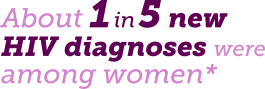
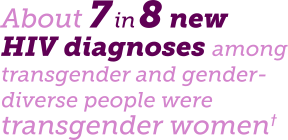
Women made up about 1 in 5 new HIV diagnoses in the U.S. in 2023, a reminder that HIV is an STI that can affect anyone. And among transgender and gender-diverse people, 7 out of 8 new HIV diagnoses were among transgender women in 2022. That’s where PrEP (pre-exposure prophylaxis) can come in.

If you didn’t know, PrEP is a prescription medicine that you routinely take before you’re exposed to HIV to help reduce your chances of getting it. It comes as a daily pill or an injection given by a healthcare provider (HCP) every few months. Learn about an injectable HIV prevention medication.

*2023. AIDSVu. U.S. data.
†2022. CDC. U.S. data.

Thinking about your own needs, experiences, and health goals can help you decide if you should ask your healthcare provider about PrEP.

Here’s a quick list of things to consider:

Sexually active

YES
NO

Had an STI before

YES
NO

Sometimes forget condoms

YES
NO

A partner's HIV status is unknown

YES
NO

Has a partner with HIV

YES
NO

PrEP belongs in the same convos you’re already having about women’s health.

STI prevention: Do you have a regular routine when it comes to preventing STIs? PrEP can fit alongside a routine of STI testing, using condoms, and talking openly with your partner(s) about HIV status.

Pregnancy and family planning: PrEP may be an option to help protect you and your baby from getting HIV while you try to get pregnant, during pregnancy, or while breastfeeding.

Birth control: Currently available PrEP options may be used with birth control methods, such as the pill, patch, ring, shot, implant, and IUD.

Hormone therapy: PrEP may be taken alongside hormone therapy as a part of gender-affirming care or for another reason.

Looking to get the convo started with your HCP? Here are a few questions you can ask:

  • “I learned sexually active women could benefit from PrEP. Could you tell me more?”
  • “Can you tell me about how effective PrEP can be for women?”
  • “I know PrEP helps protect against HIV, but how do I help protect myself from other STIs?”

How to get started on PrEP:

Chat with your HCP: You can talk to an HCP, including your OBGYN, and just let them know you’re considering PrEP. They’ll go over the different options with you, some being about 99% effective in preventing HIV through sex when taken as prescribed.

Get tested for HIV

Get tested for HIV: To be on PrEP, you have to be HIV negative, so regularly getting tested for HIV is key. You can find testing locations using this link or even look into doing rapid self-tests at home.

Stick to a routine: Different types of PrEP call for different routines—but no matter which PrEP you’re on, sticking to your routine and taking it exactly as prescribed is always the right move. PrEP doesn’t protect against other STIs though, so it’s also important to use condoms and other healthy sex practices.

If cost is a worry, know that most insurance plans will cover PrEP and PrEP-related services like HIV testing.‡

Visit pleaseprepme.org/paying-prep for more information or reach out to your insurance provider.

‡All non-grandfathered commercial plans and Medicaid expansion plans.

Visit pleaseprepme.org/paying-prep for more information or reach out to your insurance provider.

‡All non-grandfathered commercial plans and Medicaid expansion plans.